
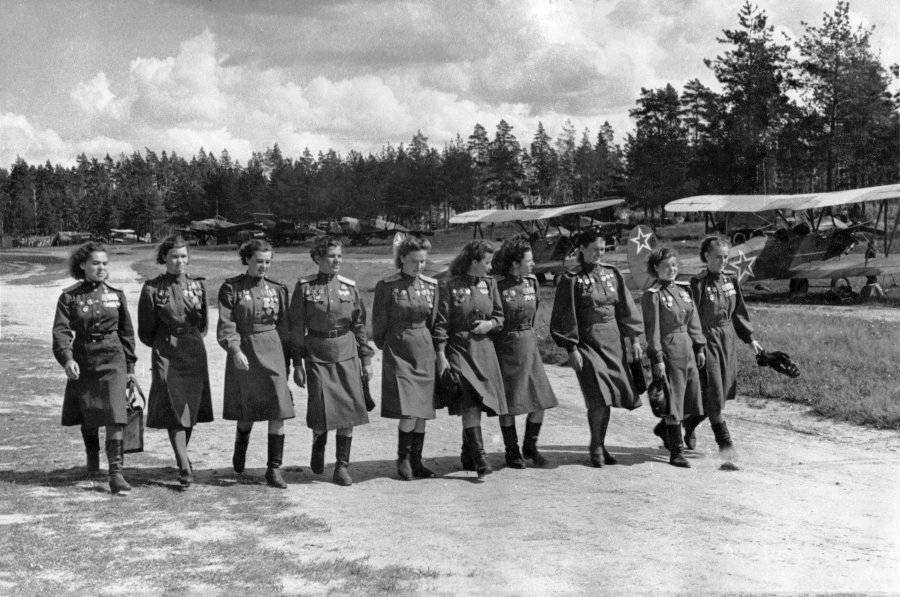
Image: The 588th Night Bomber Regiment in 1945, infamous for their use of the Po-2
The Polikarpov Po-2, nicknamed Uchebnyy-2 (Training) was a soviet bi-plane in use from 1929 to around 1952, making it one of the longest and most produced bi-planes in history.
Named after the Soviet engineer, Nikolai Polikarpov, the U-2 was outdated by the time of it’s use during the Great Patriotic War. However, it still had uses, and became a terror to the Germans, especially due to their use by the 588th Night Bomber Regiment, an all female regiment nicknamed the ‘Night Witches’ by the Germans.
While the amount of bombs they could carry was low, they kept the Germans awake at night, contributing to the loss of morale amongst the Axis soldiers on the Eastern front. They used a ‘glide bomber tactic’, turning their engines off and gliding on the wind, silent as the night, releasing their bombs, before turning the engine on, flying into the dark. Pilots such as Yekaterina Ryabova flew up to 18 missions a night, antagonising the Germans, annoyed they were being attacked by women.
These missions were by no means easy. While more manoeuvrable then the Germans, they had no armament, and were sitting ducks if caught. Pilots weren’t given parachutes, as they were expected to glide down, but the light material of the U-2 was flammable, and many pilots burnt to death as they crashed. Crashing behind enemy lines was seen as dishonour, and they were expected to fight to the death, pilots who made it back were sometimes even executed. The success of these out of date planes made the Germans use their own outdated planes in similar ways.
Even after the war was over, the planes saw further use in the eastern bloc and other communist countries, with the Democratic People’s Republic of Korea using them to great effect against the Republic of Korea during the Korean War, effective due to their small size, making radar struggle to lock onto them. It was during the Korean war the U-2 became the first bi-plane credited with a Jet Plane kill, with an F-94 Starfire slowing to below it’s stall speed to try and take one out, being lost in the process. They were nicknamed Bedcheck Charlies, due to their night-usage.
While phased out, the planes saw further use, with Albania using them up until 1985. The U-2, an unassuming plane, became an iconic symbol of the Soviet struggle against the Nazi’s and then the Capitalists, and it’s use by the Night Witches makes it an easily recognisable plane.
Some still survive in good condition to this day, held in museums around the world.
Sources:
Sabaton History – The Night Witches, Female Soviet Pilots
Myles, (Bruce) Night Witches: The Amazing Story Of Russia’s Women Pilots in World War II.
Handler, M. S., United Press, “Russia’s New ‘Secret’ Weapon Revealed to Be Old-Type Training Ship: Crates Glide Through Skies, Blast Nazis; Veteran Planes Helping Write History on Eastern Front Despite Slow Speed
worldairforces.com
Dorr, (Robert F.) B-29 Superfortress units of the Korean War
Grier, (Peter) “April 15, 1953”. Air Force Magazine, Air Force Association


